Projects at PUM
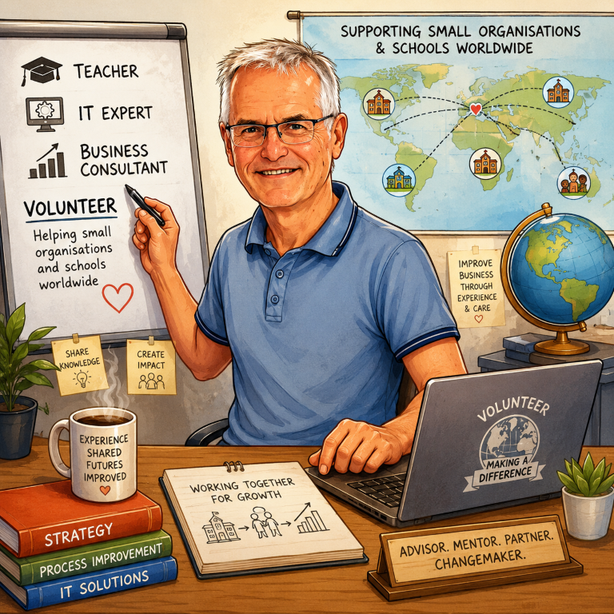
I am a volunteer expert at PUM (www.pum.nl), a Dutch organisation that helps ambitious entrepreneurs and organisations worldwide grow sustainably and create local impact.
As an IT professional with a background in education, I mainly support schools and companies in developing countries—though “developing” may not always be the best word. Through PUM’s local representatives, small businesses that are struggling to grow can request expert advice in areas such as agriculture, hospitality, beekeeping, farming, coffee production, and construction.
My own focus is IT, business, and—given my recent experience—education. Based on the specific business challenge, PUM matches the organisation with a suitable expert. About 30% of projects are done remotely via video calls; for the others, the expert usually visits the client for around two weeks. PUM covers the travel costs, while the client hosts and supports the expert during the visit.
Under PUM’s policy, I work mainly with small organisations of roughly 20–80 employees that have been operating for several years. My goal is to help strengthen the local ecosystem by encouraging cooperation between businesses and educational institutions
How I help
- Improving learning methods, curriculum structure and further digitization.
- Optimizing business strategy: analyzing processes and creating a roadmap for sustainable growth, including IT budgeting and change management.
- Implementing new IT systems: from selection and configuration of ERP and CRM solutions to network and cybersecurity strategies that fit local capabilities.
NEW: Video based training for PUM clients
As an experiment, I am creating special training for PUM clients in my education center. The first one is about the possibilities of IT to help the business.
Here all comes together: during my project (October 2025) in Algeria I discovered the huge power of the open source business software. The company implemented ERPNext and with the team we were able to define all requirements AND the system was capable of delivering all. All business knowledge within ERPNext could be use to help the company with their financial IT, the warehousing, the retail and the production in their factories.
After the visit I looked into with an education angle, and also their Learnin Management System and online course system.
In October 2026 several request were coming from PUM-clients, in need of better IT support for their business. I planned to share my knowledge of ERPnext in webinars, but...... put your money where your mouth is:
I started use ERPNext to create Video based training, running on Frappe. And the course, specific for PUM-clients
My Projects at PUM
Below an overview of the projects I performed within PUM.
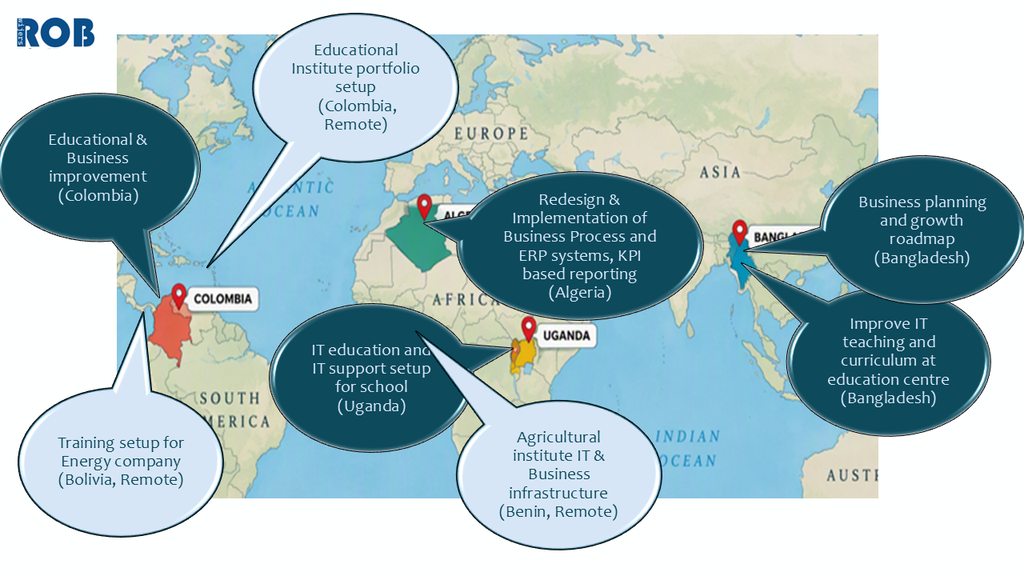
Improving IT lessons (Bangladesh)
Purpose
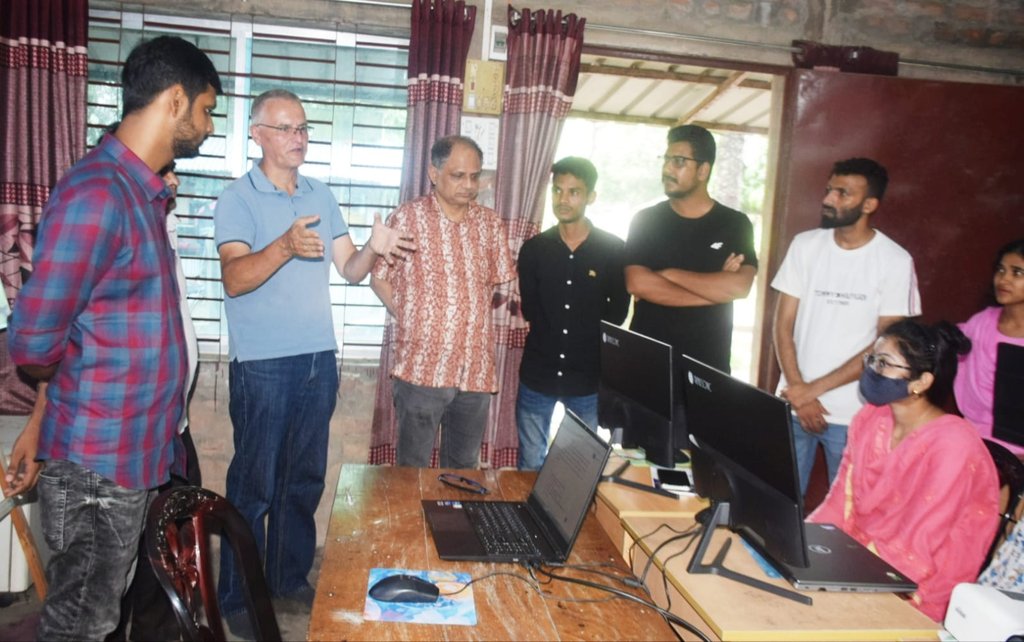
Help a team of IT teachers at a secondary school north of the capital (180 km, about 5 hours by car) improve their lessons. The focus was on teaching method, the use of IT resources, and how well the training meets the needs of the companies where students will work.
Key problem
Most students come from disadvantaged backgrounds, such as remote villages with farming families. They get laptops and learn technical skills, but they lack social skills. Unlike children of office workers, they get little help at home with discussing, explaining or job applications. Girls in particular are modest and not used to speaking up for themselves.
Recommendation
Build social skills into the classroom through group exercises and job application training, so technically strong students get a fair chance at a job. This has substantially increased the success rate of job applications.
Expansion
Adapting the curriculum design to digitization.
Setup ERP system (Algeria)
The challenge
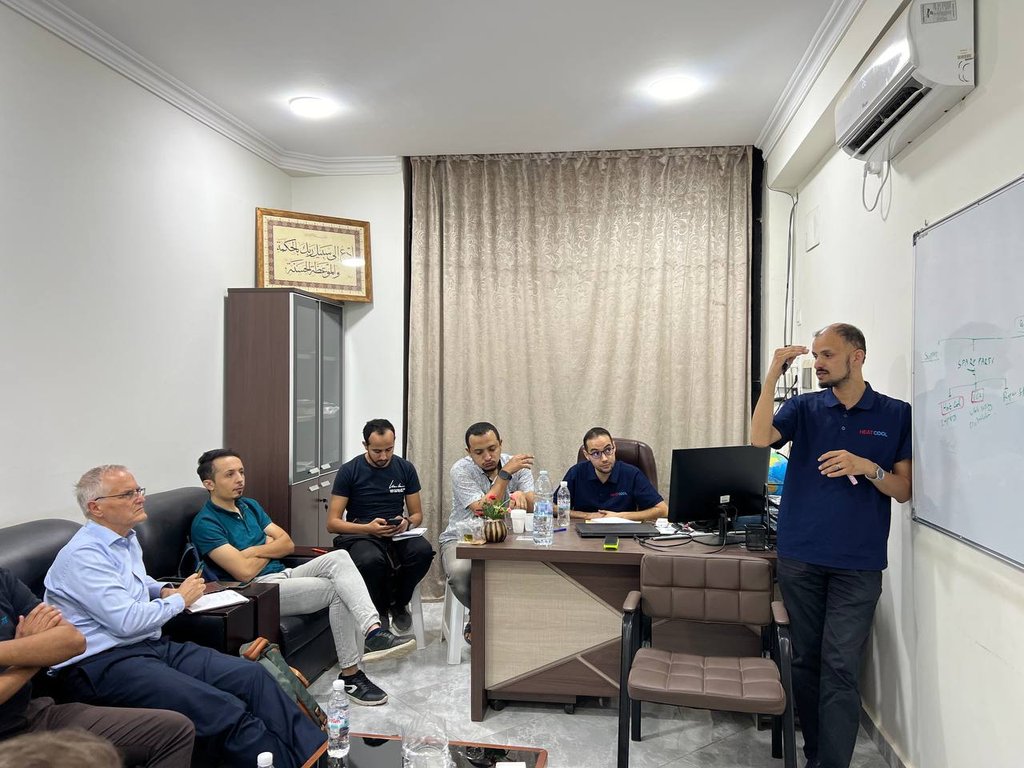
ECS (purchasing/selling of cooling and heating equipment and production of parts) – the Heatcool Creative Company in Algiers – has grown with more and more parts. As a result, management no longer had control and the request came to help with the implementation of an ERP system.
The core insight
But the core is that you can't introduce a new system if you don't yet know how to set up your organization. So it's about processes, good measurements and reports (KPIs) and motivated employees. The new system should help.
What I did
I took the management from Critical Success Factors to KPIs within clear procedures, drew up the information needs based on that and set up ERPNext as an open source system. In addition, we also set up the financial system, both at corporate level and at the business units. This allows for further, controlled growth.
Business plan Educational institute
The assignment
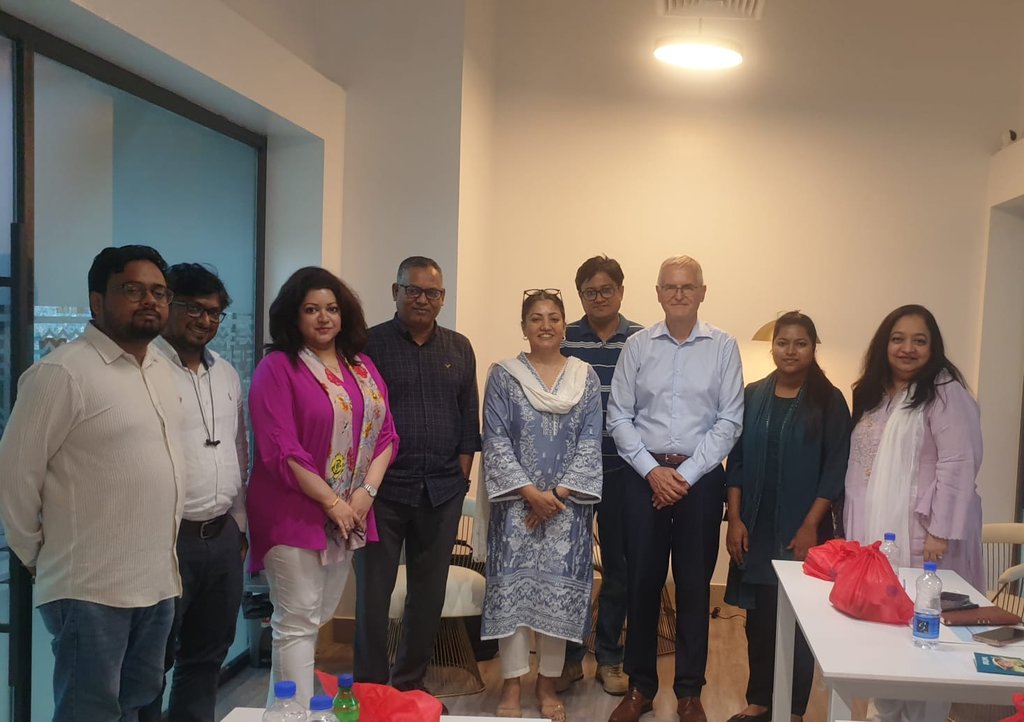
Follow-up project for ARBAN (from June 2025), but now to jointly determine the organization's strategy and draw up a multi-year plan. Now especially in Dhaka, where government and NGO stakeholders are located. A weekly remote meeting in advance, in which we discuss the strategy.
A new structure
ARBAN has implemented a strategic restructuring to better align the organization with the needs of the market and society. The new structure consists of five pillars: Formal Government Education, IT Skills Development, Craftsmanship Development, SDG-related projects and a Media Center that functions as a news platform and knowledge source. This redesign is supported by a strengthened IT foundation, focused on digital self-development and the implementation of a new ERP system to optimize business operations.
Knowledge Hub and branding
In addition, a central Knowledge Hub is being developed as a reliable, integrated source of information. This hub makes it possible to bundle data from all pillars, significantly improving decision-making, reporting and transparency. In parallel, ARBAN has strengthened its branding and online visibility, resulting in a more cohesive identity and a more professional digital presence.
Entrepreneurship and AI
The existing Beautification programme has been expanded to include entrepreneurial elements to increase students' employment opportunities, market access and self-reliance. Finally, ARBAN has decided to actively use artificial intelligence for writing proposals and other communication tasks. By harnessing the power of AI through targeted prompting, the need for external consultancy has been eliminated, while the quality and effectiveness of proposals for government and NGO assignments has increased.
Setting up an online learning system (Bolivia, remote)
The request
A remote project to help Enervida, a company that sells solar panels and related equipment. In the supply of equipment, they must instruct the users. This is now only done on location, but it takes a lot of time. The intention is also to offer training courses remotely, online.
What I did
I made a basic setup of that course in my own IT environment.
Junior school IT knowledge (Uganda)
The result
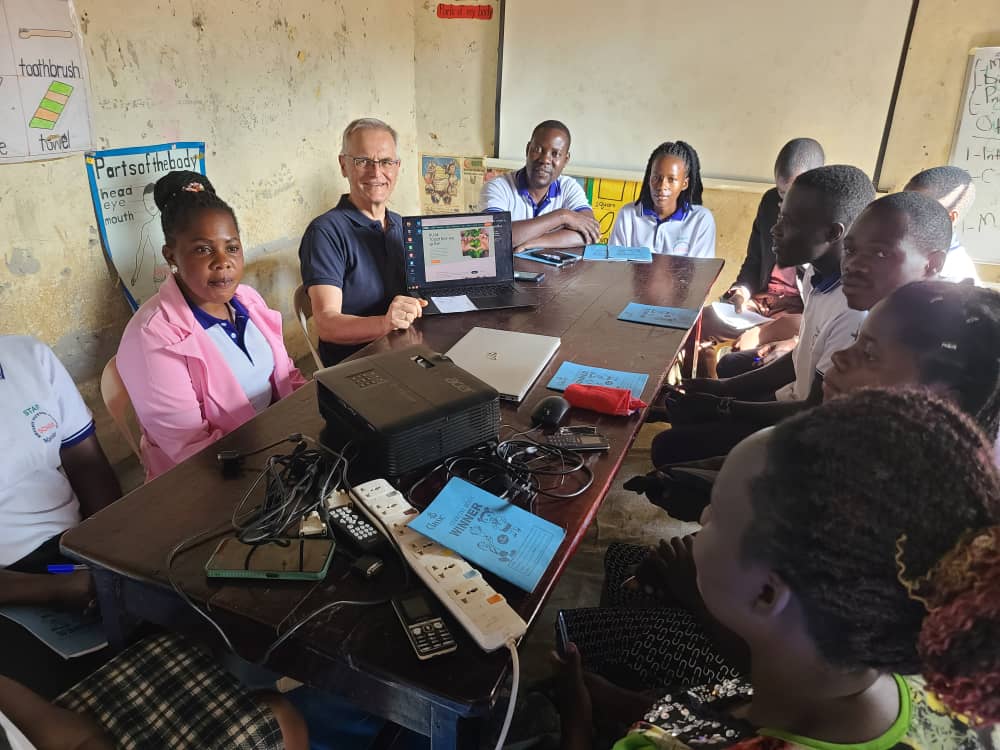
From one broken Windows XP machine to a fully digitally equipped school — that is the result of my PUM expert mission to a primary school in Eastern Uganda. Thanks to two donated laptops from Conflux, teachers are now learning to work with word processing, spreadsheets, presentations, graphic design, AI tools, and even video editing to record their own lessons. The entire environment is open source: Linux Mint, LibreOffice, GIMP, Scribus and Shotcut — affordable, sustainable and fully tailored to the local situation on a tight budget.
How it went
After preparation via recorded instructional videos, two weeks followed on location near Kampala. The commitment of the teachers exceeded all expectations: within one week they independently recorded lessons and edited them immediately. Halfway through the mission, the internet was added, which enabled file exchange between laptops and Android smartphones via a local network app. A great proof that digital autonomy is really feasible even with limited resources.
English school in Colombia
The starting point
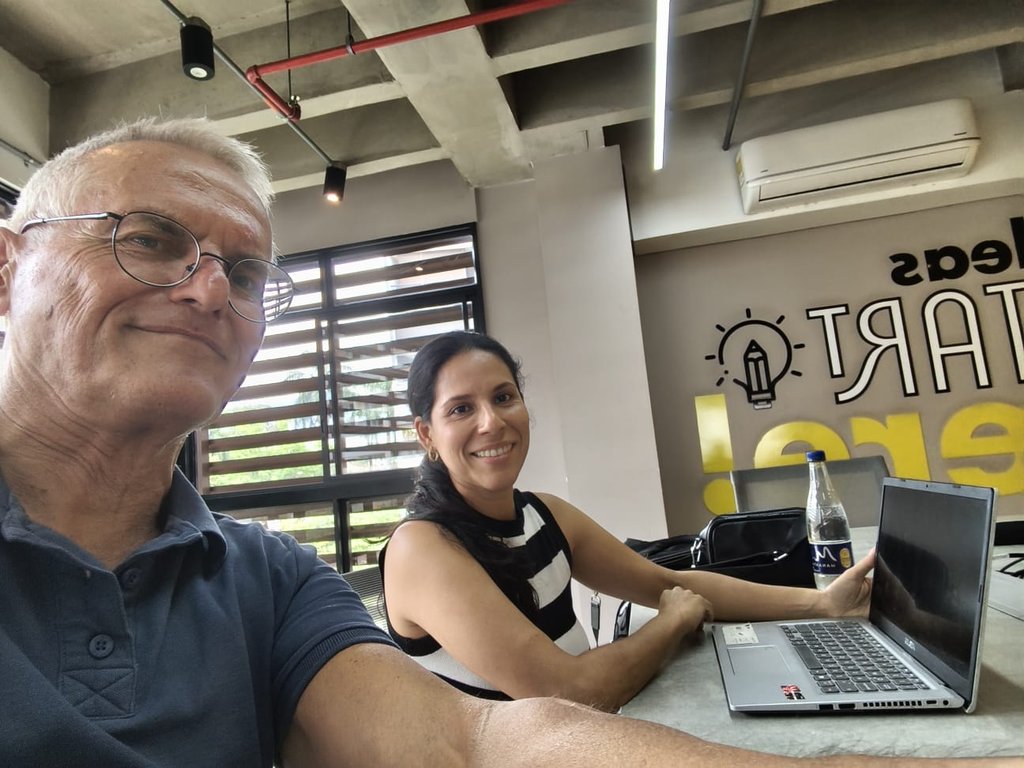
Andrea’s company, Red Tower, provides English lessons in Cali, Colombia. It is highly successful, but needs a strong foundation—teaching methods, organization, processes, and administration—to grow in a healthy way.
How we worked together
Our collaboration began more than six weeks before I arrived, through video calls. Andrea clearly explained her unique approach to language training, and my role was to ask the right questions and help identify solutions to the bottlenecks limiting growth. She acted on ideas immediately, so we had already built a strong foundation before meeting in person.
On location in Cali
During my two-week assignment in Cali, we made rapid progress in the first week. We worked long days, speaking with students, client companies, teachers, and staff—while also enjoying Cali’s salsa, food, fruit, and friendly people.
An earthquake changes everything
Then, at the start of week two, an earthquake struck Cali. Priorities changed instantly. Andrea first checked on her family, home, teachers, and students; thankfully, everyone was safe. But our accommodation was no longer safe, so Andrea took care of me too. We stayed at her brother’s home, sleeping on air mattresses, while business plans gave way to safety and practical matters.
Adapting and moving on
Once things settled and safety was assured, we adapted and continued our work through remote video calls. We are not there yet, but I felt proud when Andrea said this experience felt different from her MBA and other training: less about rigid frameworks, more about turning theory and real-world experience into concrete action—whatever the circumstances.